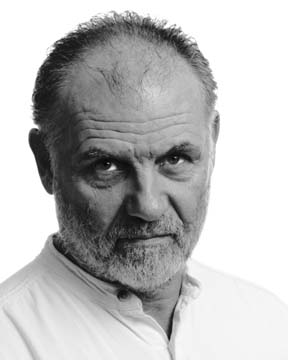
photo Chris Leck
Video Samples
Wallachian dance Musica Maestrale
Polish Music at Polish Hall (Aug. 17, 2012)

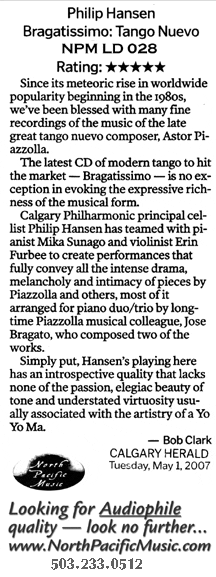
Review
American Record Guide May/June 2004
Guide to Records p.171
SVOBODA: Clarinet Chamber Works 1
Michael Anderson, Todd Kuhns; Kristen Halay, fl; Edward McManus, hn;
Thomas O'Connor, ob; Steve Vacchi, bn; Tomas Svoboda, (p) North Pacific
16--67 minutes
[...]
The notes are well done, and the sound is excellent. This is
Volume 1, chamber works with clarinet, so I assume we have a lot coming
down the pike. Michael Anderson is a fine player (as are all the
players here), and the Oregon Festival of American Music must be an
attractive place to be every year if the quality is this high. Svoboda
has much to offer, and while this is my first exposure to him, I can
definitely recommend it to newcomers. -- RITTER
Copyright 2004 by Record Guide Productions. All rights reserved.
Reviewed by Steven E. Ritter
microphones: Earthworks QTC40 omnidirectional matched pair -- the quiet, transparent, accurate
(4hz-44khz, 145spl)
preamplifiers: Grace 201 -- matched stereo pair -- quiet, accurate, warm as any tube technology
converter: Apogee PSX-100 -- 24-bit resolution, jitter-free sampling
accuracy
recorder: Alesis
ML-9600, high resolution hard-disk recorder -- full 24-bit recording,
with archiving to 24-bit CDR or standard audio CD (within hours of
session or concert)
editor: Digidesign
ProTools -- 24-bit from start to finish
mastering: Waves
digital EQ, Trueverb ambience and L1 Ultramaximizer -- inaudibly smooth
noise shaping & mastering dithers
Engineer, Producer, Composer & NPM founder, specializing, since
1991, in out-of-the-main-stream, art music, concerts and mixed-media
events, recording, mastering, production, marketing and promotion of
classical, avant garde, world, jazz and new-world-age music, at
affordable rates to discerning musicians, composers and organizations
-- artistically inspired, attitude-free professionalism from session
planning to market-ready productions with free consultation on all
production aspects: marketing standards in packaging, licensing,
copyrights, AFM & work-for-hire protocols -- credited with
productions of
"...audiophile quality."
as written in an American Record Guide, Sept./Oct. 2001 review of Tomas Svoboda - Piano Works Vol.1 - NPM LD
006.
Portland Summer Festival, 2010 - Opera in the Parks, opera in concert
for 1500 on Concordia University's quadrangle
Vancouver Peace and Justice Fair, 2009-10, Esther Short Park bandstand
sound stage for a dozen different acts
Phone Book Mash up, Olympic Mills, 2008 month-long installation
throughout 20k-sq-ft lobby.
fEARnoMUSIC, on call for special sound reinforcement solutions, while
serving as principal recording engineer since 2004.
Resident Composer and Technical Director for Agnieszka Laska Dancers,
covering all audio engineering since 2003.
Newport Symphony Orchestra, on call for special sound reinforcement
solutions, while serving as principal recording engineer since 2000.
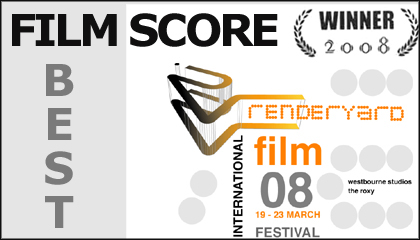 |
2008 Renderyard International Film Festival This is the most recent in a growing list of awards for the movie made from the 2006 Qerétaro, México, world premiere. |
||
  |
|
||
  |
|
||
·
Site Recording: concerts, rehearsals, events
·
CD Session Recording in live halls
·
Editing and Mastering for archiving or release
·
CDR Short-run Replication and Contracting
·
CD Replication Contracting for 500-plus runs
·
CD packaging services: layout, design, manufacturing
·
Distribution and Promotion
·
Original music for performance and media
site recording: concerts,
rehearsals, events: $125 per standard 2-hr. service,
includes archival CDR (available within 90 minutes). For events over 2
hours, add $25 per half-hour; no added costs for setup, sound check or
cartage; travel billed at $0.50 per mile for all jobs over 20 miles
from downtown Portland. Air fare and lodging at clients expense.
audio/video recroding: live concerts, delivering archival HQ audio CDR + audition footage DVD - editing and HQ import for master DVD at studio time - $37.50/hr.
CD session recording: in live
halls; recording fee: $75 per hour, includes CDR of session takes,
available within two hours. All time billed, including setup and sound
check; travel billed at $0.50 per mile for all jobs over 20 miles from
downtown Portland. Air fare and lodging at clients expense.
editing & mastering: for
archiving or release; studio time billed at $37.50 per hour, additional
CDRs, labeled and boxed: $5 each.
CDR Short-run Replication (100-500): Finished discs, with your covers inserted at factory boxed and wrapped:
$2.50 each cover design & proofing, on the clock: $37.50/hr.
CD replication:
contracting for 500+ runs
CD packaging services:
layout and design, contract printing, assembly, distribution &
promotion.
call for consultation
& pricing
original music for
performance and media